Wednesday, January 20, 2021

Frasers Holdings Rio Tinto Halal Food Becomes New Growth Pillar

Following the announcement of the acquisition of Sri Nona for RM60 million in December last year, Frasers Holdings (F&N, 3689, major consumer products) plans to develop halal food business as a new growth pillar.


Sri Nona is famous for its series of Malay rice dumplings and is also the largest brand of Malay rice dumplings in my country. Its oyster sauce ranks top three in the series.

Frass Holdings Chief Executive Officer Lin You he said in a filing on Bursa Securities that the latest investment will be used to expand more halal food platforms to meet the growing demand for convenient and ready-to-eat products.

He believes that with strong R&D capabilities, this investment will help expand the category of halal food, expand products, launch more innovative products, and increase profit margins.

He said that due to movement control and changes in consumer buying behavior, the company has strengthened its access to the market and channel strategies, by meeting consumers' needs and expectations, and narrowing the distance with consumers, including expanding e-commerce in 2020.


Felix Consulting Malaysia

Lin Youhe pointed out that the company recently opened an F&N Life distribution center in Kuala Lumpur to provide consumers with more choices, such as self-service pick-up and next-day delivery services for online shoppers.

"We develop a long-term business and believe in the long-term market potential. Therefore, no matter how big the challenges ahead, we will continue to explore opportunities to improve business performance and profits.

He said that the company will promote growth and cost efficiency under the impetus of three strategies (namely innovation, cost competitiveness and excellent execution).

"As we enter another challenging year, our knowledge, skills, expertise, capabilities, resources and commitments will continue to guide us to achieve our goals."

Tuesday, January 19, 2021

US Sanctions Put Malaysian Palm Oil Giants In A Conundrum

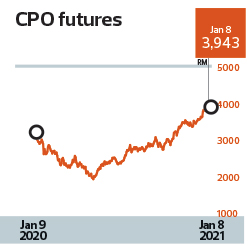
LAST Thursday, crude palm oil futures breached RM4,000 per tonne for the first time since 2008. But despite this positive upward trend in prices, a cloud still hangs over the industry following another ban by the US Customs and Border Protection (CBP), this time on palm oil and products of Malaysian plantation giant Sime Darby Plantation Bhd on allegations of forced labour. The ban came into effect on Dec 30, 2020.

This would make Sime Darby Plantation the second Malaysian plantation company to be slapped with a CBP ban, the first being FGV Holdings Bhd last September, which saw a withhold release order (WRO) being issued on its palm oil and products also due to allegations of forced labour.

From a financial perspective, exports to the US are insignificant to both Sime Darby Plantation and FGV Holdings. On a whole, exports to the US only make up 3% — equivalent to 494,306 tonnes — of Malaysia’s total exports of palm oil from January to November 2020.


Felix consulting


Nevertheless, the CBP ban still places the two companies — and Malaysian palm oil on a whole — in a conundrum due to severe reputational risks as a result of the ban.

“The ban by the US CBP is severe because this is literally a ban by the US government. With the US being the world’s largest economy, its influence is far reaching and this could have an impact on Malaysia’s palm oil trade with some major export destinations such as India and Europe.

“If you look at a company like Sime Darby Plantation, it has major investments in Europe, especially in its downstream activities, and this ban could have huge implications for it as Europe is far more concerned about environmental, social and governance principles compared with the US,” a palm oil industry expert tells The Edge.


He adds that this could also play to the advantage of Indonesian palm oil companies.

“Indonesian plantation companies are definitely going to capitalise on this opportunity to regain some lost market share from their Malaysian competitors. Players with a large interest in Indonesia such as Wilmar International Ltd and Golden Agri-Resources Ltd have investments in the US, which places them in a greater advantage.

“It will be difficult for the Malaysian companies to regain that lost market share, unless they are willing to sell their products at a huge discount,” says the expert.

In its statement on Dec 30 in response to the CBP action, Sime Darby Plantation said that the CBP’s news release does not provide sufficient information to allow the company to meaningfully address the allegations that triggered the issuance of the WRO.

“Nevertheless, we look forward to receiving pertinent information and working with CBP in order to address their concerns and quickly resolve this matter,” it said.

Sime Darby Plantation added that it will continue to engage with Hong Kong-based Liberty Shared, the non-governmental organisation (NGO) that had brought forward the allegations to CBP.

FGV in its response statement to the CBP ban last September said that it is disappointed that such a decision has been made when the company has been taking concrete steps over the past several years to demonstrate its commitment to respect human rights and uphold labour standards.

Note that the petition to CBP against FGV was filed by Grant & Eisenhofer ESG Institute in November 2019.

Monday, January 18, 2021

Malaysia's c.bank seen cutting key rate as coronavirus forces fresh lockdowns

Malaysia's central bank is expected to cut key interest rates to historic lows on Wednesday, according to a Reuters poll, after surging coronavirus infections led the government to impose fresh lockdowns, further curbing economic activity.

Nine out of 15 economists expected Bank Negara Malaysia (BNM) to cut its overnight policy rate to a record low of 1.50%, according to the poll on Monday, with another analyst betting on a bigger 50 basis point cut.

The remaining five expected the central bank to stay put.

Malaysia's economy suffered its first recession since 2009 last year, as the COVID-19 pandemic hit businesses and exports. While the economy showed signs of rebounding in the third quarter as coronavirus curbs eased, analysts expected recent restrictions to deal a fresh blow to economic activity.

The government's current 2021 growth forecast of 6.5% to 7.5% "looks pretty much unattainable," said Mohd Afzanizam Abdul Rashid, chief economist at Bank Islam.

He said he had downgraded his own growth forecast for this year to 4% from 7.3% previously.

"Therefore, it warrants more policy support," said Afzanizam.

One day after the government imposed a two-week lockdown in six states with high coronavirus cases, Malaysia's king also declared a nationwide state of emergency on Tuesday to curb the spread of COVID-19.

Critics of Prime Minister Muhyiddin Yassin have said the emergency declaration was a move to retain control amid a power struggle.

In November, the government unveiled a record 322.5 billion ringgit ($79.75 billion) budget for 2021 to spur economic activity and support growth.

The government rolled out 305 billion ringgit worth of stimulus measures last year, ranging from cash handouts to wage subsidies and loan moratoriums to help the public and businesses weather the pandemic.

The government expects the economy to have contracted 4.5% last year. - Bernama

Friday, January 15, 2021

TNB implements new terms for electricity connection charge

 KUALA LUMPUR (Jan 15): Tenaga Nasional Bhd (TNB) announced today it will implement the Malaysian government-approved enhanced terms for the electricity connection charge and connected load charge effective from today.

Felix Consulting


A connection charge is the upfront payment made by consumers who require new electricity supply infrastructure or an upgrade of existing infrastructure to cater for additional power supply, according to government-controlled utility TNB.


"The connection charge is imposed as part of TNB’s cost to build the infrastructure for electricity supply," the company said on its website.


Meanwhile, the connected load charge is a mitigating tool to discourage consumers from over-declaring their electricity load requirement, TNB said.


Over-declaration will lead to over-plant up and waste of resources and an increase in the reserve margin, the group said.


"Without the connected load charge, other consumers will have to also pay for the unnecessary higher cost of electricity due to wastage, and this would be unfair to those who do properly declare,” TNB said.


On the connection charge, TNB said that based on the updated terms, consumers are categorised based on supply voltage levels.


TNB said there are three categories, namely the low voltage, medium voltage and high voltage groups.


The low voltage category is for supply voltage of below 6.6kV, while the medium voltage group involves 6.6kV to 132kV, and the high voltage category involves supply voltage of above 132kV, according to TNB.


"[For medium voltage consumers,] the connection charge per kilowatt maximum demand (kW MD) is applicable. The amount to be paid depends on the maximum demand requested by the consumer.


"The connection charge is RM45/kW MD,” TNB said.


On the connected load charge, TNB said a new consumer is subjected to the charge for a period of six years from the date electricity supply is connected.


Felix Consulting


Meanwhile, an upgrading consumer is subjected to the new connected load charge for a period of five years from the date the additional electricity supply is connected.


In TNB’s statement today, the company said the government recently approved the enhanced terms for the connection charge and connected load charge.


"The connection charge invoice (pro forma) issuance after Jan 15, 2021 is subjected to the new connection charge terms.


"For pro forma issuance before Jan 15, 2021 where the payment has not yet been made, customers may choose one of the following options: Proceed with payment based on the existing pro forma or request TNB to issue a new pro forma with the new connection charge terms,” TNB said.


At 4.05pm on Bursa Malaysia today, TNB’s share price was up four sen or 0.4% at RM10.16, valuing the company at about RM57.91 billion.


The counter had seen about two million shares traded.

Wednesday, January 13, 2021

AirAsia's digital platform eyes more airline partnerships


Malaysian budget carrier AirAsia Group’s travel, e-commerce and fintech unit airasia.com is in partnership talks with several Middle Eastern and European airlines, its chief executive said on Wednesday.

Airasia.com CEO Karen Chan said the company was working on selling more flights on the online platform.

"Apart from just selling AirAsia flight tickets, we are now selling any airline's flights tickets. We are now in serious discussions with quite a few full-service carriers," Chan said at a CAPA — Centre for Aviation event.

She said the company was working closely with Middle Eastern airlines to drive traffic to pilgrimage destinations.

"Religious travel has taken a huge delay, and already we are getting a lot of requests from customers for pilgrimages," she said.

Airasia.com was also in talks with some European airlines, she said. "Once international borders are open, all of us are banking on pent-up demand," she said without providing details.

Last November, airasia.com announced a strategic partnership with Turkish Airlines for cross-promotion of its flight inventory with AirAsia flights, and offered travel itineraries with discounted fares.

"Now we can pull their content and inventory onto airasia.com's platform," Chan said. The company offers more than 15 lines of products online and via its super-app "to fly, to stay, to shop, to eat", an earlier media statement showed.

With the airline business taking a hit from the coronavirus pandemic, AirAsia Group last year rebranded its digital arm as AirAsia Digital, which houses airasia.com.

Malaysia's flagship budget airline AirAsia Group said last September it is considering raising capital to expand its digital business.

Monday, January 11, 2021

Five stocks indicated negative momentum while one displayed positive momentum

Six stocks at Bursa Malaysia’s afternoon close today. Five stocks indicated negative momentum while one displayed positive momentum.

The stocks with negative momentum were:

Cheetah Holdings Bhd — down two sen at 74 sen

GUH Holdings Bhd — up one sen at 52 sen

Multi-usage Holdings Bhd — down 1.5 sen at 38 sen

PIE Industry Bhd — up 36 sen at RM3.02

PNE PCB Bhd — fell 9.5 sen at 75.5 sen

The stock with positive momentum was:

Silver Ridge Holdings Bhd — up one sen at 60.5 sen

The list of stocks with momentum is generated using a proprietary mathematical algorithm highlighting stocks with a build-up in trading volume and price. The algorithm differentiates between stocks that exhibit positive (+ve) momentum and negative (-ve) momentum.

This list is not a buy or sell recommendation. It merely tells you which stocks are seeing higher than normal volume and price movements.

Thursday, January 7, 2021

Keeping Covid-19 At Bay, Vietnam Revs Up Economy

File pic shows a garment factory in Vietnam. Vietnam will strive to achieve a gross domestic product (GDP) growth of about 6.5% in 2021, higher than the target of 6% earlier assigned by its top legislature.

HANOI: Vietnam's success in curbing the coronavirus so far, while its Southeast Asia neighbours struggle, is helping the country power ahead in economic growth and attracting funds, foreign investors, experts and analysts say.

Its strength in containing the pandemic saw it build on the foundations of two free trade agreements signed in 2020, also outpacing peers in luring manufacturers moving production out of China because of the Beijing-Washington trade war. Vietnam was one of the world's few countries to record growth last year - well down on 2019, but still a 2.9% expansion.


Felix Consulting


Vietnam watchers expect the country to ride high as long as it keeps the virus - resurgent in many countries - at bay. Thanks to rigorously targeted testing, a centralised quarantine programme and early border closures, Vietnam's coronavirus tally stands at just over 1,500 cases and 35 deaths to date - far fewer than any comparable country given its population of nearly 98 million.

"The successful management of the pandemic to date has already enabled the country to capture a larger share of global trade and FDI (foreign direct investment) during 2020," said Carolyn Turk, the World Bank's country director in Vietnam.

Parliament has set an economic growth target of 6% for this year, but Prime Minister Nguyen Xuan Phuc, looking to extend his term or rise up the Communist Party of Vietnam's ranks, said last month that Vietnam would target 6.5%.

At WHA Group, a Thai logistics firm which has expanded its industrial estate business in Vietnam, chairwoman Jareeporn Jarukornsakul said investors who had wanted to relocate operations to Thailand from China had not been able to do so because the coronavirus had spread in Thailand.

While infrastructure and regulatory issues are worse in Vietnam than in Thailand, she said,"Costs are cheap in Vietnam and its government is very quick with investment, allowing provinces to issue their own regulations and investment incentives."

Still, there is much work to be done, even if the country does retain its prowess in handling the coronavirus: Vietnam suffers from a lack of highly-skilled labour, its dated bureaucracy is in need of digitisation and there is an over-reliance on polluting coal imports to fuel development.

But the cocktail of positives flowing through the economy currently has left foreign-invested asset managers in Vietnam able to raise significant amounts, for example, with some reporting oversubscribed funds.

On Monday, Ho Chi Minh City-based Mekong Capital said it had raised $246 million for its largest-ever fund - nearly 25% more than the original target of $200 million.


Felix Consulting


Dominic Scriven, chairman of Vietnamese asset manager Dragon Capital said a combination of the country's trade deals, more cash in the economy and political stability had underpinned better-than-expected interest across three new funds launched by his firm.

"We were very pleasantly surprised by the market uptake," said Scriven.

PULLING AHEAD

That extra cash, along with savings accounts offering declining interest rates after three cuts in the central bank's policy rate since March, has created a surge in local stock market investors.

The number of new investors has increased so much that the benchmark Ho Chi Minh City Stock Exchange has been forced to halt afternoon trading in order to process the surge.

Development was also boosted by the two free trade deals signed last year: the Regional Comprehensive Economic Partnership (RCEP), the world's largest trading block, and an agreement with Britain modelled on the EU-Vietnam Free Trade Agreement (EVFTA), which Vietnam ratified in June.

Hanoi also has bilateral trade deals with both South Korea and Japan, its largest sources of foreign direct investment, and is a signatory to the 11-country Comprehensive and Progressive Agreement for Trans-Pacific Partnership (CPTPP).

The trade deal push has given it an advantage over some of its regional competitors. The EVFTA in particular has "put Vietnam clearly on the map", said Sven Schneider, Chief Executive of the EU-Malaysian Chamber of Commerce.

"Malaysia, on the other hand, is only waking up to this missed opportunity now," said Schneider.

WHA Group's Jareeporn also said the EVFTA had given Vietnam an advantage. "If an industry needs cheap labour, it's definitely going to Vietnam," Jareeporn said.

In the short term, Vietnam is well placed to pull ahead of its regional rivals in 2021, just as it holds a massive Communist Party meeting to select a new leadership later this month.

"It's safe, the government functions smoothly, and in face of impediments like COVID the country rises to the challenge without hesitation and wins," Chad Ovel, partner at Mekong Capital, said.

Wednesday, January 6, 2021

Supercomnet reclassified under healthcare sector


Supercomnet Technologies Bhd (SCOMNET) will be reclassified under the healthcare sector effective from Jan 11.

It is currently classified under the industrial products and services sector.

Bursa Malaysia in a statement today said the sub-sector for SCOMNET will also be reclassified from industrial, materials, components and equipment to healthcare equipment and services upon the company's request.

"The classification of sector and sub-sector for SCOMNET has been updated based on criteria which take into account, among others, changes in business activity for the company and core business activity contribution to the company's financial results," it said.

The stock number and stock short name for SCOMNET's securities will remain unchanged, it said.

KLCI down 0.78% as banking stocks drag, US equity futures slip

 KUALA LUMPUR (Jan 6): The main index at Bursa Malaysia was down 0.78% at the midday break on Wednesday as banking stocks dragged against the backdrop of slipping US equity futures.

At 12.30pm, the FBM KLCI was down 12.32 points to 1,596.03.

Market breadth was tepid with 469 losers and 253 gainers, while 726 counters traded unchanged. Trading volume was 3.88 billion shares valued at RM2.19 billion.

The top losers included Nestle (Malaysia) Bhd, Heineken Malaysia Bhd, Carlsberg Brewery Malaysia Bhd, Hong Leong Financial Group Bhd, Petronas Dagangan Bhd, Hong Leong Bank Bhd, Greatech Technology Bhd and Malaysian Pacific Industries Bhd, CIMB Group Holdings Bhd, Malayan Banking Bhd, Public Bank Bhd and RHB Bank Bhd.

The actively traded stocks included Iris Corp Bhd, Vortex Consolidated Bhd, DGB Asia Bhd, Yong Tai Bhd, Bumi Armada Bhd, Sapura Energy Bhd and Puncak Niaga Holdings Bhd.

The gainers included Kobay Technology Bhd, Toyo Ventures Holdings Bhd, Gets Global Bhd, IQ Group Holdings Bhd, Pharmaniaga Bhd and KPower Bhd.

Bloomberg said US equity futures slipped with Treasuries on Wednesday as votes were counted in key elections in Georgia that could have implications for President-elect Joe Biden's agenda.

Asian stocks were little changed, it said.


felix consulting Malaysia


Hong Leong IB Research said in the absence of immediate-term drivers, KLCI may continue to extend consolidation (weekly supports: 1562-1575; resistances 1618-1638), as investors digest more news flow about the resurgence of Covid-19 pandemic, vaccine distributions and challenges faced by nations in vaccinating their citizens coupled with the resumption of RSS.

"Nevertheless, optimism on economic recovery amid the multiple Covid-19 vaccine breakthroughs, a combination of continuing fiscal and monetary stimulus, the low-interest rate environment and China's firmer economic recovery will continue to underpin interests in the equity market.

"Meanwhile, surging oil prices, soybean prices and FCPO may provide some trading interests among the O&G and plantation stocks," it said.

KLCI down 0.78% as banking stocks drag, US equity futures slip

KLSE, KLCI, Financial
Source - Edgemarkets

The main index at Bursa Malaysia was down 0.78% at the midday break on Wednesday as banking stocks dragged against the backdrop of slipping US equity futures.

At 12.30pm, the FBM KLCI was down 12.32 points to 1,596.03.

Market breadth was tepid with 469 losers and 253 gainers, while 726 counters traded unchanged. Trading volume was 3.88 billion shares valued at RM2.19 billion.

The top losers included Nestle (Malaysia) Bhd, Heineken Malaysia Bhd, Carlsberg Brewery Malaysia Bhd, Hong Leong Financial Group Bhd, Petronas Dagangan Bhd, Hong Leong Bank Bhd, Greatech Technology Bhd and Malaysian Pacific Industries Bhd, CIMB Group Holdings Bhd, Malayan Banking Bhd, Public Bank Bhd and RHB Bank Bhd.

The actively traded stocks included Iris Corp Bhd, Vortex Consolidated Bhd, DGB Asia Bhd, Yong Tai Bhd, Bumi Armada Bhd, Sapura Energy Bhd and Puncak Niaga Holdings Bhd.

The gainers included Kobay Technology Bhd, Toyo Ventures Holdings Bhd, Gets Global Bhd, IQ Group Holdings Bhd, Pharmaniaga Bhd and KPower Bhd.

Bloomberg said US equity futures slipped with Treasuries on Wednesday as votes were counted in key elections in Georgia that could have implications for President-elect Joe Biden's agenda.

Asian stocks were little changed, it said.

Hong Leong IB Research said in the absence of immediate-term drivers, KLCI may continue to extend consolidation (weekly supports: 1562-1575; resistances 1618-1638), as investors digest more news flow about the resurgence of Covid-19 pandemic, vaccine distributions and challenges faced by nations in vaccinating their citizens coupled with the resumption of RSS.

"Nevertheless, optimism on economic recovery amid the multiple Covid-19 vaccine breakthroughs, a combination of continuing fiscal and monetary stimulus, the low-interest rate environment and China's firmer economic recovery will continue to underpin interests in the equity market.

"Meanwhile, surging oil prices, soybean prices and FCPO may provide some trading interests among the O&G and plantation stocks," it said.

Monday, January 4, 2021

Top Glove commits to special dividend of 20%


The world’s largest glove maker said the special dividend was in addition to its existing dividend policy of a 50% dividend payout ratio on its profit after tax and minority interests for the second, third and fourth quarters of financial year 2021.

MAINBOARD-LISTED Top Glove Corporation has committed to a special dividend of 20 per cent, in addition to its existing dividend policy of a 50 per cent payout ratio on profit after tax and minority interests (PATMI).

The total 70 per cent dividend payout ratio on PATMI will be applicable for the second quarter to the fourth quarter of FY2021, the Malaysia glove maker said in a bourse filing on Monday.

This is in consideration of its "good profit performance and strong cash flow", as well as to reward shareholders, Top Glove said.

At 3.47pm, it was trading at RM5.65, down 47 sen with nearly 320 million shares done.

It hit an early low of RM5.23.

The FBM KLCI was down 18.90 points or 1.16% to 1,608.32. Turnover was 6.04 billion shares valued at RM4.85bil.

Decliners hammered advancers 1,000 to 289 while 307 counters were unchanged.

Top Glove and other glove makers fell sharply in early trade, triggered by the upliftment of the temporary suspension of regulated short selling (RSS) by the Securities Commission (SC) and Bursa Malaysia Bhd.

Credit Suisse Still Positive On Glove Sector Due To Affordable Valuation

KUALA LUMPUR (Jan 4): Despite the availability of vaccines seen around the globe, Credit Suisse is still positive on the glove sector due to its inexpensive valuation and higher dividends.

Credit Suisse’s co-head of ASEAN securities research and head of research in Malaysia Danny Goh said the glove sector is trading at less than five times P/E multiple versus its historic average of 17%, and is at present offering a dividend of more than 10%.


Felix Consulting


“Thus, in terms of valuation and dividends point of view, gloves do provide very good value at this point of time,” said Goh, at Credit Suisse's 2021 ASEAN Conference media briefing today.

Based on feedback from the glove makers, Goh said the average selling price is still trending upwards on a quarter-on-quarter basis, noting that 2021 “earnings is pretty much already in the bag”.

“While the pandemic does pose some question marks on how long demand and selling prices could continue to stay firm, but if we were to rely on the feedback of some of the glove makers, the forward orders will last them well into 2022,” he added.

From this perspective, he noted that glove stocks do seem defensive at this point of time, given that it is one of the few sectors that is seeing positive earnings momentum, offering very high dividend yield and trading at very low valuation relative to history.


Felix Consulting


As at noon break today, the big four rubber glove makers have wiped out RM13.65 billion worth of market capitalization on Bursa Malaysia, due to the strong selling pressure that is possibly no thanks to the short selling ban that has been lifted as of today.

Thursday, December 31, 2020

Bursa joins Asean markets to end morning weaker


Asean markets slumped on the final trading day of 2020 while at Bursa Malaysia, the FBM KLCI was weighed down by losses in Sime Darby Plantation, Maybank and Top Glove.

At 12.30pm, the KLCI was down 9.04 points or 0.55% to 1,635.37. Turnover was lacklustre at 2.98 billion shares valued at RM2.98bil. The broader market was cautious with 560 losers to 402 gainers and 484 counters unchanged.

China's Shanghai Composite rose 0.83% and Hong Kong's Hang Seng Index added 0.31% while Taiwan's Taiex gained 0.14%. South Korea and Japan markets were closed.

Among Asean markets, Singapore's Straits Times Index slipped 0.89%, Thailand's SET fell 0.86% and Jakarta's Composite 0.95% lower.

Sime Plantation fell 17 sen to RM5 after it was accused of using forced labour prompting the US to ban imports of its palm oil. It erased 1.79 points from the KLCI.

Crude palm oil for third month delivery fell RM11 to RM3,577 per tonne.

KL Kepong lost 20 sen to RM24, IOI Corp was flat at RM4.40 and also unchanged was PPB Group at RM18.86.

Among the banks, Maybank fell five sen to RM8.52 and erased 0.86 of a point, CIMB five sen lower at RM4.33, Hong Leong Bank 18 sen to RM18.38 but Public Bank rose eight sen to RM20.78. Aeon Credit lost 16 sen to RM11.92.

As for glove makers, Top Glove fell seven sen to RM6.05 and erased 0.87 of a point, Hartalega six sen lower at RM12.14 and Supermax three sen to RM5.95. Kossan fell 15 sen to RM4.45.

Get Free Signal for KLSE Makret

Tenaga shed two sen to RM10.50, GentingM three sen to RM2.70 and Genting two sen to RM4.51.

US light crude oil eased three cents to US$48.37 and Brent one cent to US$51.62.

Petronas Chemicals fell five sen to RM7.45, Petronas Dagangan and Petronas Gas unchanged at RM21.40 and RM17.34. Dialog shed two sen to RM3.45.

Toyo Ventures was the top gainer, up 23% ot 39 sen to RM1.69 and its warrants 30 sen to RM79.5 sen.

MPI added 32 sen to RM25.20 and JF Tech 17 sen to RM4.99.