Wednesday, December 23, 2020

Felda's RM1.30 Offer For FGV Shares Deemed Fair By Analysts

KUALA LUMPUR (Dec 23): Analysts are largely of the view that the Federal Land Development Authority's (Felda) RM1.30 offer price for shares in FGV Holdings Bhd is fair, given how the planter's shares have performed over the past year.


CGS-CIMB regional head of agribusiness and head of research Ivy Ng said the offer price should not be compared against FGV's initial public offering (IPO) price of RM4.55, as the planter had a different structure, and that market conditions were different then.


"I think minority [shareholders] should consider accepting the offer and reinvest in companies with higher potential return, as FGV's upside may be capped by the offer price of RM1.30," Ng told theedgemarkets.com.

Ng also noted there is still uncertainty surrounding FGV, particularly its land lease agreement (LLA) with Felda, where issues could arise over its termination and compensation terms. The LLA involves Felda-owned estates totalling 350,733ha, which were leased to FGV for 99 years from Nov 1, 2011.


Felix Consulting


Recall the Cabinet had previously given the green light for Felda to terminate the LLA with FGV, with Felda also wanting to take over the latter's oil palm mills. FGV is supposed to get compensation from the termination, although the group previously maintained that it still had not received any notice of the termination from Felda.


Meanwhile, Ng pointed out that major shareholders Retirement Fund Inc (KWAP) and Urusharta Jamaah Sdn Bhd — who each sold a 6.1% stake and a 7.78% stake respectively to Felda — would have done a great deal of analysis before parting with their stakes in FGV for RM1.30 apiece as well.

Similarly, an analyst who covers the plantation sector but declined to be named said minority shareholders should look at exiting the planter now with Felda's offer, as there is still a great deal of uncertainty when it comes to the LLA and the group as a whole.


"Of course if you bought [FGV] at RM4.55 [a share], this offer would be below your investment cost, however, if you bought at when FGV was trading at, say 80 sen to RM1 a piece, there is a definite upside when it comes to the offer price," the analyst said.


Felix Consulting


Felda's RM1.30 offer for each FGV share is a steep 71.43% discount to the planter's IPO price of RM4.55. When contrasted against its one-year low of 72 sen on March 19, however, the offer is at an 80.56% premium.

FGV topped Bursa Malaysia's most active list and rose among leading gainers in morning trade today after the plantation group said yesterday it had received an unconditional mandatory takeover offer notice at RM1.30 a share from Felda, which intends to delist FGV from the local bourse.


Felda's takeover offer for FGV became unconditional after the collective FGV shareholding of Felda and persons acting in concert with it rose past 50%. FGV's delisting will happen if Felda and its associates are able to acquire in aggregate 90% or more of FGV's shares in the takeover.


The announcement came after Felda completed the proposed share acquisition announced on Dec 8. Its shareholding in FGV had increased to 50.49% from 36.61% previously. Hence, the conditional mandatory takeover offer, which was also unveiled on Dec 8, is now an unconditional offer.

At the offer price of RM1.30 a share, FGV is valued at some RM4.75 billion based on its issued share capital of about 3.65 billion.


As at 3.50pm, FGV was trading just two sen below the offer price, at RM1.28 — up 10 sen from the previous day's closing — with 188.38 million shares traded, giving it a market capitalisation of RM4.67 billion.


Tuesday, December 22, 2020

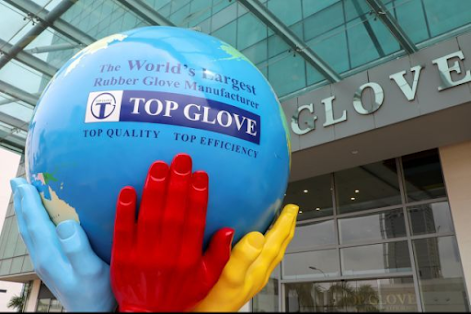
ESG concerns take some shine off Top Glove


ANALYSTS remain positive on Top Glove Corp Bhd despite the environmental, social and governance (ESG) concerns that have emerged over the glove maker’s staff living quarters.

While they imputed a discount on their target prices for Top Glove because of this, most of the analysts have maintained their bullish calls on the company following the release of its results for the first quarter ended Nov 30 (1QFY2021) — it posted a record net profit of RM2.38 billion on its highest ever quarterly revenue of RM4.76 billion.

RHB Investment Bank, for example, has maintained its “buy” call on Top Glove but ascribed a 10% ESG discount to its target price and cut its ESG score for the group to 2.78 (from 3.22) on lower points for the Social or “S” component.

CGS-CIMB, while maintaining its “add” call, has cut its target price on the rubber glove giant by 11% to RM8.90 per share from RM10 previously. The cut was premised on a lower price-to-earnings ratio of 16 times for calendar year 2022 from 17 times previously to account for ongoing concerns over the ESG issues, particularly in relation to its foreign workers.

Maybank Investment Bank’s target price of RM8.65 for Top Glove assumes a higher weighted average cost of capital as it takes into consideration the social compliance issues.

Meanwhile, the Employees Provident Fund (EPF), which emerged as Top Glove’s substantial shareholder on Sept 21 with a 5.05% stake, has been trimming its shareholding in the glove maker. According to Top Glove’s filing with Bursa Malaysia on Dec 10, EPF sold 1.5 million shares on Dec 7, leaving the pension fund with a 5.56% direct stake comprising 445.65 million shares in Top Glove. Since Dec 1, EPF has divested a total of 22.14 million shares in the company.

Industry observers believe ESG concerns may be the main reason for EPF’s divestment of Top Glove shares.

Sell-off Continues as Covid-Risk Fears Intensify

 KUALA LUMPUR: Bursa Malaysia took another drubbing as the negative sentiment surrounding the discovery of a new strain of coronavirus weighed on global equities and oil prices.


Reuters reported that countries have shuttered their doors to Britain following news that the new strain of virus found in the country was up to 70% more transmissible than the original.


Felix Consulting


At 12.30pm, the benchmark FBM KLCI was down 16.94 points to 1,630.95. Market breadth was overwhelmingly negative with 989 declining counters on the market versus 232 gainers.


Financial heavyweights led the fall on the index with Maybank sliding 11 sen to RM8.37, Public Bank dropping 18 sen to RM20.48, CIMB losing 15 sen to RM4.15 and Hong Leong Bank shedding 12 sen to RM18.46.


Some attention returned to glove stocks given the prospect of a worsening crisis as Top Glove rose one sen to RM6.63 and Hartalega added six sen to RM12.56.


Among Petronas-related counters, Petronas Gas dropped 24 sen to RM17.32, Petronas Chemicals fell 21 sen to RM7.33 and Petronas Dagangan lost six sen to RM21.


On a sectoral basis, the Bursa Malaysia Energy Index was among the worst hit with the sector falling 1.8% as crude oil prices extended their slide on the prospect of more economic shutdowns.


Brent crude was down 24 cents or 0.5% to US$50.67 a barrel while WTI crude dropped 31 cents or 0.65% to US$47.66 a barrel.


The Bursa Malaysia Financial Services Index slid 1.5% and construction shed 1.7%.


The Technology Index held up relatively well with only a 0.7% decline.


Of actives, Technax slid two sen to 14.5 sen, Iris rose one sen to 40 sen and Bintain Kinden added 9.5 sen to 76 sen.


Felix Consulting


In Asian markets, the MSCI Asia Pacific ex-Japan Index slid 0.5%


Japan's Nikkei was down 0.7% and South Korea's Kospi dropped 0.4%.


China's benchmark index fell 0.2% while Hong Kong's Hang Seng lost 0.1.


Australia's ASX 200 slid 1.25%.

Weak sentiment continues to weigh on KLCI at midday

Worries over a new strain of Covid-19, coupled with weak oil prices, continued to weigh on investor sentiment, dragging Bursa Malaysia to end the morning session broadly lower.

At the lunch break, the benchmark FBM KLCI was 16.94 points or 1.03% lower at 1,630.95 after moving between 1,627.22 and 1,647.36 throughout the morning session.

The overall market breadth was negative with losers overtaking gainers 989 to 232, while 375 counters were unchanged, 541 untraded and 17 others suspended.

Volume stood at 5.45 billion units worth RM2.65 billion.

Malacca Securities Sdn Bhd said in a note that the negative sentiment from the new virus strain might spill over to stocks on the local front.

The research firm expected trading interest to revolve around construction and building materials as well as property sector amid the potential Kuala Lumpur-Singapore High Speed Rail (HSR) news flow coupled with the rising building material prices.

“Also, we expect the vaccine distribution candidate may surface as the health minister stated that [the government] will try to get all the vaccine supplies by the first quarter of 2021,” it said.

Among the heavyweights, Malayan Banking Bhd (Maybank) and IHH Healthcare Bhd fell 11 sen each to RM8.37 and RM5.64 respectively, Public Bank Bhd lost 18 sen to RM20.48, Tenaga Nasional Bhd (TNB) erased 10 sen to RM10.58 and Petronas Chemicals Group Bhd (PetChem) declined 21 sen to RM7.33.

However, Top Glove Corp Bhd rose one sen to RM6.63 and Hartalega Holdings Bhd gained six sen to RM12.56.

Among the actives, Techna-X Bhd trimmed two sen to 14.5 sen, Iris Corp Bhd added one sen to 40 sen, Bintai Kinden Corp Bhd increased 9.5 sen to 76 sen, and Vivocom Intl Holdings Bhd fell nine sen to 89 sen.

On the index board, the FBM Emas Index was 132.55 points lower at 11,716.27, the FBMT 100 Index lost 128.07 points to 11,486.1, the FBM Emas Shariah Index erased 106.12 points to 13,180.42, the FBM 70 contracted 201.01 points to 14,957.31, and the FBM ACE reduced 45.22 points to 10,433.23. 

The Industrial Products and Services Index shrank 2.69 points to 172.27, the Plantation Index gave up 47.26 points for 7,310.93 and the Financial Services Index dropped 224.0 points to 15,159.58.

Meanwhile, Bursa in a statement announced the transfer of Greatech Technology Bhd's shares from the ACE Market to the Main Market under the technology sector.

In a statement, it said the transfer would take effect on Dec 28, 2020 at 9am.

Monday, December 21, 2020

KLCI extends profit-taking as year-end approaches


KUALA LUMPUR: The FBM KLCI ended Monday on a negative note, its third straight day of losses as profit-taking continued ahead of the year-end holiday season and fears of a new strain of coronavirus threatened the global recovery outlook.

At 5pm, the key index ended 4.6 points lower at 1,647.89, after having lost over 10 points earlier in the day.

Trading volume was 8.09 billion shares valued at RM3.67bil. Market breadth was negative with 848 decliners compared to 394 gainers.

An analyst speaking to StarBiz said the profit-taking in recent days was owing to thinning liquidity ahead of the coming festivities, especially after a strong rally in November.

Meanwhile, he believes that the euphoria surrounding the roll out of the Covid-19 vaccines could have been priced in for the short term.

"November and December data are starting to reflect the recent spike in Covid-19 cases and impact from targeted lockdown reimplementation," he added.

Over the next two days, the price action in the market could signal bullish investors' sentiment as seen during 2018's year-end rally.

"While investors had turned positive in 2018 due to the Fed's dovish turn on interest rates, market participants could similarly be energised by the US$900bil US fiscal stimulus this time around.

"On the flipside, given the already elevated share prices, market players could stay on the sidelines until 1H 2021," he said.

Bank stocks, which have been a driver of the market's rally earlier in the week, were seen mixed amid the broader retreat.

Maybank was up two sen to RM8.48, Public Bank rose two sen to RM20.66, CIMB dropped eight sen to RM4.30 and Hong Leong Bank was flat at RM18.58.

Global stocks were also seen stumbling on news that UK and other parts of Europe could face new lockdown measures following the discovery of a fast-spreading strain of the coronavirus.

The prospect of new economic shutdowns offset the news that US policymakers had reached a deal for a US$900bil relief package, resulting in mixed results in Asian markets.

MSCI index of Asia-Pacific shares ex-Japan slipped 0.2% after hitting successive new highs last week.

KLCI Slips 1.31% As Investing Sentiment Sours Amid CMCO Extension

KUALA LUMPUR (Dec 18): The FBM KLCI slipped 1.31% or 21.86 points today, tracking declines in regional peers, while news of the conditional movement control order being extended weighed on domestic investing sentiment.


Felix consulting


The benchmark index settled at 1,652.49, with 852 counters in the negative versus 370 that climbed, while 474 were unchanged.


The FBM KLCI slipped 1.31% or 21.86 points today, tracking declines in regional peers, while news of the conditional movement control order being extended.


KUALA LUMPUR (Dec 18): The FBM KLCI slipped 1.31% or 21.86 points today, tracking declines in regional peers, while news of the conditional movement control order being extended weighed on domestic investing sentiment.


The benchmark index settled at 1,652.49, with 852 counters in the negative versus 370 that climbed, while 474 were unchanged.


Senior Minister Datuk Seri Ismail Sabri Yaakob announced today that the CMCO will be extended in Selangor, Kuala Lumpur and Sabah till Dec 31, as Covid-19 infections in these places remain elevated. This is the fourth extension of the CMCO that was first imposed on Oct 14 and originally scheduled to end on Oct 27.


Senior Minister Datuk Seri Ismail Sabri Yaakob announced today that the CMCO will be extended in Selangor, Kuala Lumpur and Sabah till Dec 31, as Covid-19 infections in these places remain elevated. This is the fourth extension of the CMCO that was first imposed on Oct 14 and originally scheduled to end on Oct 27.


Felix Consulting


TA Securities Holdings Bhd senior technical analyst Stephen Soo told theedgemarkets.com that window-dressing activities were absent following news about the CMCO extension, which weighed on the sentiment.


The CMCO was also extended till Dec 31 in Seremban and Port Dickson in Negeri Sembilan, and in Johor Bharu, Batu Pahat and Kulai in Johor.


TA Securities Holdings Bhd senior technical analyst Stephen Soo told theedgemarkets.com that window-dressing activities were absent following news about the CMCO extension, which weighed on the sentiment.


Moving onto next week, he expects the benchmark index to continue pulling back ahead of the Christmas holiday week. “Key support for the KLCI will be at 1,590, followed by 1,615, while the immediate resistance is 1,695 and 1,680,” Soo added.


Across Bursa Malaysia, trading volume fell to 8.06 billion units from 9.24 billion shares yesterday, while trading values saw a slight improvement to RM4.4 billion from RM4.33 billion.


Meanwhile, consumer products and services related companies Nestle (M) Bhd, Fraser and Neave Holdings Bhd and British American Tobacco (M) Bhd as well as technology stocks Unisem (M) Bhd and Malaysian Pacific Industries Bhd were among the top gainers today.


The actives, on the other hand, were led by Vsolar Group Bhd, which topped the list after 397.99 million shares were traded. The stock closed half a sen higher at 4.5 sen. Other actively traded stocks included Techna-X Bhd (formerly Sino Hua-An International Bhd), Hiap Teck Ventures Bhd, MNC Wireless Bhd, Puncak Niaga Holdings Bhd, Bintai Kinden Corp Bhd and PA Resources Bhd.


Elsewhere in Asia, Japan's Nikkei 225 fell 0.16 %, while Seoul's Kospi inched up 0.06%. In China, Hong Kong’s Hang Seng Index sank 0.67%, while the Shanghai Stock Exchange Composite Index inched down 0.29%.

Reuters reported that Asian stocks fell slightly on Friday, failing to catch a broader global rally, as investor mood in the region shifted to caution about the economic outlook and as post-Brexit worries weighed.

Friday, December 18, 2020

Glove Makers In Spotlight As Regulated Short-Selling Lifted

Glove-making companies will be closely monitored given their high net short positions as a ban on regulated short selling (RSS) will be lifted from Jan 1.

Felix Consulting


Kenanga Research, in its latest report, said the latest RSS aggregated net short positions taken from Bursa Malaysia’s website as at the close of Dec 15, showed glove makers as having the highest net short positions.

The top four names with the highest percentage total outstanding net short positions are not surprisingly glove makers namely Top Glove Corp Bhd (1.27%), Supermax Corp Bhd (1.23%), Kossan Rubber Industries Bhd (1.15%) and Hartalega Holdings Bhd (0.97%), ” Kenanga Research said.

However, the regulator extended the ban on the intraday short-selling (IDSS) and intraday short-selling by proprietary day traders (PDT Short Sale) until Feb 28, 2021. Consequential to the extension of PDT Short Sale, temporary waivers in relation to PDT will also be extended to Feb 28, 2021.


To recap, the ban on short selling of equities was imposed by the Securities Commission Malaysia (SC) and Bursa Malaysia starting on March 24 this year when global markets were hammered by the equity rout. The move, said the regulators, was “part of their proactive measures to mitigate potential risks arising from heightened volatility and global uncertainties.”


The suspension was initially targeted to end on April 30 but was extended for three times. At first it was targeted to end on June 30, but was extended till Dec 31, 2020 and it was further extended till Feb 28, 2021

Kenanga also noted that in terms of total short able volumes/average daily trade volumes, the figures translated to 3.50 times, 2.58 times, 6.77 times and 13.38 times, respectively, which are among the lowest in the list of 46 names.


Felix Consulting


Kenanga said that only nine companies out of a list of 46 stocks with total net short positions of 0.1% and above of outstanding shares are benchmark FBM KLCI components which are the three main glove makers: Top Glove, Supermax and Hartalega.


It noted that the lifting of the ban comes with tighter new measures which caps the net short position at 4% and reduces the daily gross short position limit from 3% to 2%.

The SC and Bursa Malaysia Bhd will lift the temporary suspension of Regulated Short Selling (RSS) and have reviewed other market management measures that were introduced this year following heightened market volatility arising from the broader impact of Covid-19.

Reservoir Link secures RM46mil Mauritania contract


KUALA LUMPUR: Reservoir Link Energy Bhd's subsidiary has been awarded a US$11.5mil (RM46.44mil) contract by PC Mauritania 1 Pty Ltd for the provision of perforation and wash for the abandonment and decomissioning of Chinguetti and Banda Fields, offshore Mauritania.

The contract will not have any effect on the share capital and shareholding structure of the Company.

However, the contract is expected to contribute positively towards the earnings of RLSB and hence, the Company during the Contract duration.


At midday break, shares in Reservoir Link were up


Latitude Tree, Metronic, My EG, Dutch Lady, Affin Bank, Eco World, Eco World International, VS Industry, Scientex, LKL International and Perak Corp

KUALA LUMPUR (Dec 17): Based on corporate announcements and news flow today, companies that may be in focus on Friday (Dec 18) include: Latitude Tree Holdings Bhd, Metronic Global Bhd, My EG Services Bhd, Dutch Lady Milk Industries Bhd, Affin Bank Bhd, Eco World Development Group Bhd, Eco World International Bhd, VS Industry Bhd, Scientex Bhd, LKL International Bhd and Perak Corp Bhd.

Latitude Tree Holdings Bhd has proposed a one-for-one bonus issue of up to 97.16 million new shares plus an employees’ share scheme (ESS) of up to 10% of the total issued share capital of the company.

The furniture maker said the actual number of bonus shares to be issued will depend on the total issued shares on the entitlement date, which will be determined and announced at a later date upon receipt of all relevant approvals. It said the ESS is for eligible directors and employees of the company and its subsidiaries.

Its board of directors expects the proposals to be completed by the second quarter of 2021.

Metronic Global Bhd plans to raise up to RM33.94 million — almost a quarter of its current market capitalisation of RM141.52 million — through a private placement of up to 373.74 million shares or 30% of its issued shares, mainly to fund its existing and future engineering projects. The issue price of the new shares and the third-party investors will be decided at a later date, the company said.

The bulk of the proceeds, or RM32.65 million, will be used for existing and future engineering projects. Its engineering project order book stood at RM112.82 million at the latest practicable date, according to the filing to Bursa Malaysia.

My EG Services Bhd (MyEG) has cancelled 100 million of its treasury shares. The group’s total number of treasury shares held after the resale or transfer stood at 53.66 million. Its adjusted issued capital after the cancellation is 3.67 billion shares.

Dutch Lady Milk Industries Bhd said it will invest RM340 million to construct new manufacturing facilities on three parcels of land in Bandar Enstek, Negeri Sembilan that it bought this year. The group said the facilities will include manufacturing and warehousing facilities, support facilities and office facilities. They will be used for the manufacturing of the group's dairy products with capacity and space for the manufacturing of other variations that it may produce.

The facilities will be constructed between 2021 and 2025, the group said, adding that it will use internal funds for the investment.

Affin Bank Bhd has confirmed that two more of its employees at its headquarters have tested positive for Covid-19 and they are now undergoing treatment.

The bank said it will be providing the employees and their families with the necessary support and guidance while all other staff in Menara Affin who had immediate contact with the affected staff will be screened and tested for Covid-19.

It did not say that the headquarters will be closed but clarified that the affected office space as well as common areas such as elevators and toilets are being cleaned and disinfected accordingly, adding that disinfection will also be carried out in the entire building.

Eco World Development Group Bhd (EcoWorld) and its 27%-owned associate Eco World International Bhd (EWI) have set a combined sales target of RM5 billion for the financial year ending Oct 31, 2021 (FY21).

For financial results, EcoWorld said its net profit fell 18.41% to RM66.45 million for the fourth quarter ended Oct 31, 2020 (4QFY20) from RM81.46 million a year ago. Revenue declined 30% to RM635.47 million from RM906.54 million. The group attributed the lower profit for FY20 mainly to closures of sales galleries during the Movement Control Order (MCO) period, the temporary cessation of site activities from mid-March to mid-June, and the cumulative impact of inventories written down in 3QFY20 and 4QFY20.

EcoWorld declared a maiden interim dividend of two sen per share.

Meanwhile, EWI saw its net profit plunge 85.25% to RM17.44 million for 4QFY20 from a year ago, even though revenue jumped to RM57.38 million from RM254,000. The weaker performance in FY20, it said, was due to a lower share of results of joint ventures (JVs) and the commencement of accounting impairment of goodwill.

VS Industry Bhd’s net profit climbed 38.7% to RM66.68 million for the first quarter ended Oct 31, 2020 (1QFY21) from RM48.07 million a year ago, mainly due to a favourable product sales mix for its Malaysian operations. This was despite a 4.6% drop in revenue to RM987.1 million from RM1.03 billion, due to lower contribution from its China business.

On a quarter-on-quarter (q-o-q) basis, its net profit rose 23.2% from RM54.12 million for 4QFY20, while revenue grew 11.84% from RM882.61 million. The group declared a first interim dividend of 1.2 sen per share, which will be paid on March 5, 2021.

Packaging materials manufacturer Scientex Bhd’s net profit grew 14.3% year-on-year to RM92.53 million in the first quarter ended Oct 31, 2020 (1QFY21), from RM80.96 million in the same quarter last year, as its packaging division reported higher earnings.

The improved bottom line came despite an 8.6% decline in revenue to RM802.26 million from RM877.37 million. The group did not declare any dividend for the quarter.

LKL International Bhd is buying two pieces of freehold industrial land in Seri Kembangan for RM12 million or RM556 per sq ft. The lands, measuring a combined built-up area of 21,600 sq ft or 0.49 acres, also comes with two units of three-storey semi-detached factory erected on top.

The group’s wholly-owned subsidiary LKL Advance Metaltech Sdn Bhd inked the sale and purchase agreement today for the acquisition of the land from Positive Frontier Sdn Bhd, a private limited company engaged in property investment and development. It is wholly-owned by SE Commerce Sdn Bhd.

LKL said the acquisition will be funded via the proceeds it raised from the private placement announced on July 17, which raised a total of RM45.45 million.

Perak Corp Bhd has announced a debt restructuring with its creditors involving cash settlements worth over RM220 million, issuance of its shares worth over RM30 million, proposing a debt waiver amounting to RM544.55 million, and future settlements by the group's turnaround plan in the ordinary course of business.

The company is selling off four pieces of land to the Social Security Organization (Socso) for a total of RM78.68 million to settle part of its debts. It added that the debt settlement is part of efforts towards the formalisation of the group’s regularisation plan to uplift itself from its Practice Note 17 (PN17) status.  

A sum of RM70.81 million of the sale proceeds will be used for repayment of bank borrowings, and the other RM7.87 million will go for working capital requirements. The "scheme creditors" involved in Perak Corp's debt settlement scheme include Affin Islamic Bank Bhd, CIMB Bank Bhd, Affin Hwang Investment Bank Bhd, Bank Pembangunan Malaysia Bhd and Malaysia Debt Ventures Bhd.  

Separately, it has been slapped with an unusual market activity (UMA) query by the stock exchange over the sharp rise in its share price and volume today. The group is engaged in property and investment holding, real property development and provision of management services.

Thursday, December 17, 2020

Electricity demand dips, renewable energy gains momentum

The fallout from Covid-19 has a significant impact on electricity consumption trends in Malaysia as movement restrictions have led to sudden change in socioeconomic habits.

At the peak of the pandemic, only essential industries were allowed to operate, some at only 50% capacity, while the rest of the industries were either shutdown or adapted to remote working practice.

It had resulted in a sudden decline in energy demand, especially in commercial and industrial usage.

Despite a surge in household consumption of electricity, it was not enough to fill the drop in commercial and industrial usage as the economy was only operating at 45% of its capacity during the seven-week movement control order (MCO) period.

Tenaga Nasional Bhd (TNB) had said during the MCO, electricity usage in the industrial and commercial sectors dropped between 25% and 50% as businesses and industries halted activities, while usage in the residential sector surged between 20% and 50% as families stayed indoors and employees worked from home.

It expected the electricity consumption to drop between 6% and 10% year-on-year in 2020, mainly due to slowing activities in the commercial sector.

The forecast is within the range of 5%-10% of global electricity demand fall predicted by the International Energy Agency (IEA).

This has also impacted the demand for coal, oil and gas.

According to the IEA, renewable was the only source that posted a growth in demand, driven by larger installed capacity and priority dispatch.

“Electricity demand is unlikely to return to normal levels even after the development of a coronavirus vaccine, ” according to a report by scientists from Columbia University.

TNB feels the pinch

Its nine months net profit declined to RM2.38bil from RM3.88bil from the same period last year. Revenue for the cumulative months ended Sept 30,2020 also slipped to RM33.65bil from RM38.76bil previously.

It serves 9.2 million accounts, of which 7.4 million accounts are residential while the remaining are the commercial sector.

In a filing with Bursa Malaysia, TNB said the increase in demand from the residential segment was unable to fill the decline in commercial and industrial usage as both contributed close to 80% the sales in Peninsular Malaysia.

It also reported that the Covid-19 pandemic is impacting the progress of the group’s initiatives to reduce its current exposure; including the restructuring and turnaround exercise and sale of investment, particularly in its 30% owned companies in GAMA (Turkey) and GMR (India).

However, the group’s UK assets are insulated by the long-term subsidy scheme.

Going forward, it will leverage its existing UK assets and market experience to build up a sizeable renewable energy portfolio by 2021 through acquisitions of both operating assets and development of green field projects.

Incentives

As lockdown measures and its subsequent impact led to unemployment and job losses, the government introduced various incentives under economic stimulus packages such as electricity discount to 7.5 million residential users and other affected sectors and flexi payment plan.

On the regular six-month Imbalance Cost Pass-Through surcharge, TNB confirmed the adjustment was to zero from two sen/kWh for both domestic and non-domestic electricity users, from July 1 to Dec 31,2020.

This is due to a reduction in actual fuel cost for the period of January-June 2020 compared with the previous six-month period (July-December 2019).

Shifting to renewable energy

The government has introduced several initiatives such as the enhanced net energy metering programme (NEM) and solar leasing to boost renewable energy (RE) uptake.

Banks have offered solar power financial packages with lower interest and it will help Malaysia achieve the 20% RE efficiency target by 2025.

Participation from big companies such as Taliworks Corp Bhd, Malakoff Corp Bhd and Fraser & Neave Holdings Bhd, and International Paper Sdn Bhd will help Malaysia achieve the target faster.

Other companies that seem to support the RE industry were FGV Holdings Bhd and Malakoff Corp Bhd’s unit, Southern Biogas Sdn Bhd, each installing a biogas power plant in Pahang and Johor, respectively.

Mah Sing Plastics Industries Sdn Bhd and AT Glove Engineering Sdn Bhd, each installing solar photovoltaic projects in smart factories in Klang and a manufacturing factory in Perak, respectively.

Meanwhile, the government decision to provide more incentives under Budget 2021 will boost the RE industry growth.

Among the initiatives are the first Sustainability Bond for environmental and social initiatives and RM2bil under the green technology financing scheme.

The Sustainable Energy Development Authority has estimated that some 4.1 million buildings in Malaysia might still accommodate solar panels, and collectively generate about 24-gigawatt peak of electricity.

According to the Institute for Democracy and Economic Affairs, RE capacity is expected to reach 12 gigawatt to 13 gigawatt grid installed capacity by 2030. — Bernama

Wednesday, December 16, 2020

G Capital subsidiary gets higher feed-in tariff rate for 10MW hydropower project in Sungai Perak


GCB executive director Tan Sri Dr Ali Hamsa said as an existing Feed-in Approval Holder (FiAH), GCB has now up to December 2025 to complete the construction of the hydropower project, and the FiT effective period of 21 years shall start from the commencement of operations date

In a Bursa Malaysia filing today, G Capital said Gunung Hydropower received SEDA's feed-in approval certificate on Monday, which will increase its FiT rate from 25 sen per kWh to 28.98 sen per kWh.

In addition, the contract is effective from the scheduled FiT date of Dec 14 up to December 2025, while the yearly energy yield has been increased to 68 million kWh from 67.77 kWh.

This will boost annual revenue of the hydropower project by 15.9% over the 21-year tenure, but the FiT approval is not expected to have any material impact on earnings and earnings per share (EPS) of G Capital for the financial year ending Dec 31, 2020 (FY20), said G Capital

KLCI extends gains to open higher

Bursa Malaysia extended yesterday's gains to open higher amid positive sentiment brought by the approval by Parliament of Budget 2021, while taking its cue from overnight US stocks' strong performance.

Fresh optimism over the US stimulus package pushed Wall Street higher with the Nasdaq charting a record high and the Dow Jones Index Average jumped by 340 points to remain above the 30,000 mark, dealers said.

At 9.09am, the FBM KLCI was 13.99 points higher at 1,688.01, compared with yesterday's close of 1,674.05.

It opened 20.31 points lower at 1,694.33.

The overall market breadth was also positive, with gainers leading losers 518 to 137, while 354 counters were unchanged, 1,135 untraded and 18 others suspended.

Volume stood at 773.91 million units worth RM352.99 million.

In a note today, Malacca Securities Sdn Bhd said tracking the positive sentiment on Wall Street, coupled with the approval of the third budget reading yesterday, the buying interest is expected to spill over towards stocks on the local front.

"Also, with ongoing window-dressing activities, the KLCI could be lifted higher as funds may be rotating back towards value- and recovery-themed stocks over the next two weeks.

“On the sector in focus, the firm viewed that with the approval of Budget 2021, traders could focus on recovery sectors, and we should expect a broad-based buying mode at least for the near term with the ongoing window-dressing activities.

"Construction, property, consumer, gaming and tourism should be under the limelight, while lumber-related stocks may trend higher on the back of firmer lumber prices," it added.

Among the heavyweights, Malayan Banking Bhd (Maybank) and Tenaga Nasional Bhd (TNB) added six sen each to RM8.91 and RM10.86 respectively, Public Bank Bhd rose 40 sen to RM22.08, Top Glove Corp Bhd gained 17 sen to RM6.58, while Petronas Chemicals Group Bhd (PetChem) shed 15 sen to RM7.81.

Of the actives, Sino Hua-An International Bhd improved one sen to 21.5 sen, Dynaciate Group Bhd bagged two sen to 14 sen, AT Systematization Bhd and Sapura Energy Bhd edged up half a sen each to 18.5 sen and 13.5 sen respectively, while Yong Tai Bhd was flat at 35.5 sen.

On the index board, the FBM Emas Index was 103.12 points higher at 12,112.15, the FBMT 100 Index climbed 100.41 points to 11,876.30, the FBM 70 jumped 138.08 points to 15,419.21, the FBM ACE rose 85.20 points to 10,776.52,  and the FBM Emas Shariah Index advanced 93.07 points to 13,390.03.

Meanwhile, the Industrial Products and Services Index eased 0.62 of a point to 177.03 and the Plantation Index shed 7.48 points to 7,384.41, but the Financial Services Index surged 167.63 points to 16,119.35.

Investor optimism in equities recovery continues

Emerging markets overall felt a dose of optimism in August amid hopes for a COVID-19 vaccine, continued easy monetary policy globally and improving economic data pointing toward recovery. Our emerging markets equity team breaks down the key trends, news and events it has an eye on, and shares its latest market outlook.

A trend witnessed in several countries globally, the daily number of COVID-19 cases in India started to increase in late-August as the country continued to ease quarantine restrictions and economic activity began to gradually normalize.


Felix Consulting


But if the states experiencing surges of coronavirus infections are forced to reinstate restrictions on business activity, these conditions may end, fast. While much of the U.S. stock market is discounting for the perceived pandemic recovery, we believe economic recovery will be more gradual.

Volatility has remained high through the equity rebound in the face of several key uncertainties: the trajectory of the COVID-19 virus as a second wave of infections hits states that reopened their economies; the willingness of consumers to go out and spend again; the comeback in employment after massive layoffs; and the size of a potential new fiscal stimulus package.

Indian equity markets continue to trade at a discount to long-term averages, and we believe long-term reforms and expectations of faster earnings growth could support a re-rating.

The pandemic has accelerated investment trends already underway that should continue for years to come. As a result, since March, we have been repositioning for the post-COVID environment, targeting companies that can deliver above-average growth in the next three to five years, as opposed to the next six to 12 months.


Felix Consulting


Digital transformation was already a priority investment for many companies pre-COVID, but the sudden shift to enable widespread working from home — with all of the communication, security and data needs that go with it — made technology spending an immediate business-critical consideration.